

Return From Space
After orbiting Earth aboard the International Space Station (ISS), tiny lab-grown “mini-hearts” have returned home — and they may hold critical answers for treating cardiac diseases both on Earth and beyond.
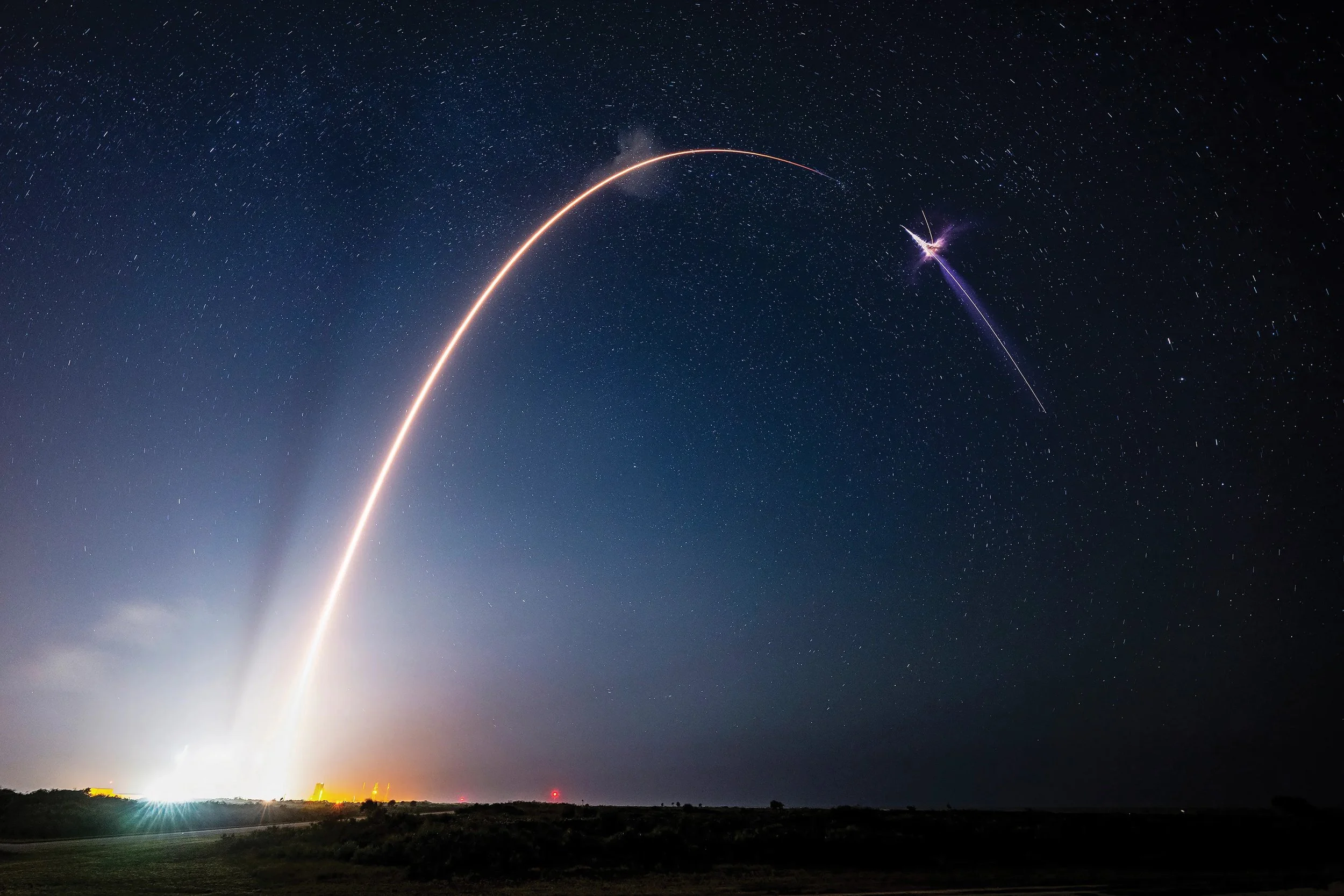
Launched to the ISS on Nov. 5, 2024, the artificial cardiac organoids spent 21 days in microgravity, part of a research partnership between Texas Tech Health El Paso and Oregon State University. The mission: to study how spaceflight affects the human heart at the cellular level.
For the experiment, Texas Tech Health El Paso faculty scientist Munmun Chattopadhyay, M.Sc., Ph.D., developed cardiac organoids — each less than 1 mm thick — using human-derived cardiac cells.
While in orbit, the cells were monitored daily through microscope images transmitted to Dr. Chattopadhyay’s lab in the Center of Emphasis in Diabetes and Metabolism at Texas Tech Health El Paso.
“It was a unique and exciting experience,” said Dr. Chattopadhyay. “Observing cell behavior in near real-time while they were aboard the ISS gave us an incredible window into how microgravity affects heart tissue.”
Importantly, the exact same experiments were performed on Earth using identical cell clusters, allowing the team to directly compare how microgravity influences cell growth, function and stress responses.
“When astronauts spend extended periods in microgravity, their heart muscles face significant stress due to reduced use,” said Dr. Chattopadhyay. “Interestingly, this same kind of oxidative stress also impacts people here on Earth — such as patients with diabetes or obesity. Understanding how cardiac cells respond in space could help us develop therapies that apply across these different conditions.”
The initial data supports the team’s original hypothesis: that microgravity would trigger stress responses in heart cells similar to those seen in chronic diseases on Earth.
Research Unlocks New Insights Into Heart Health
By Leonard Martinez
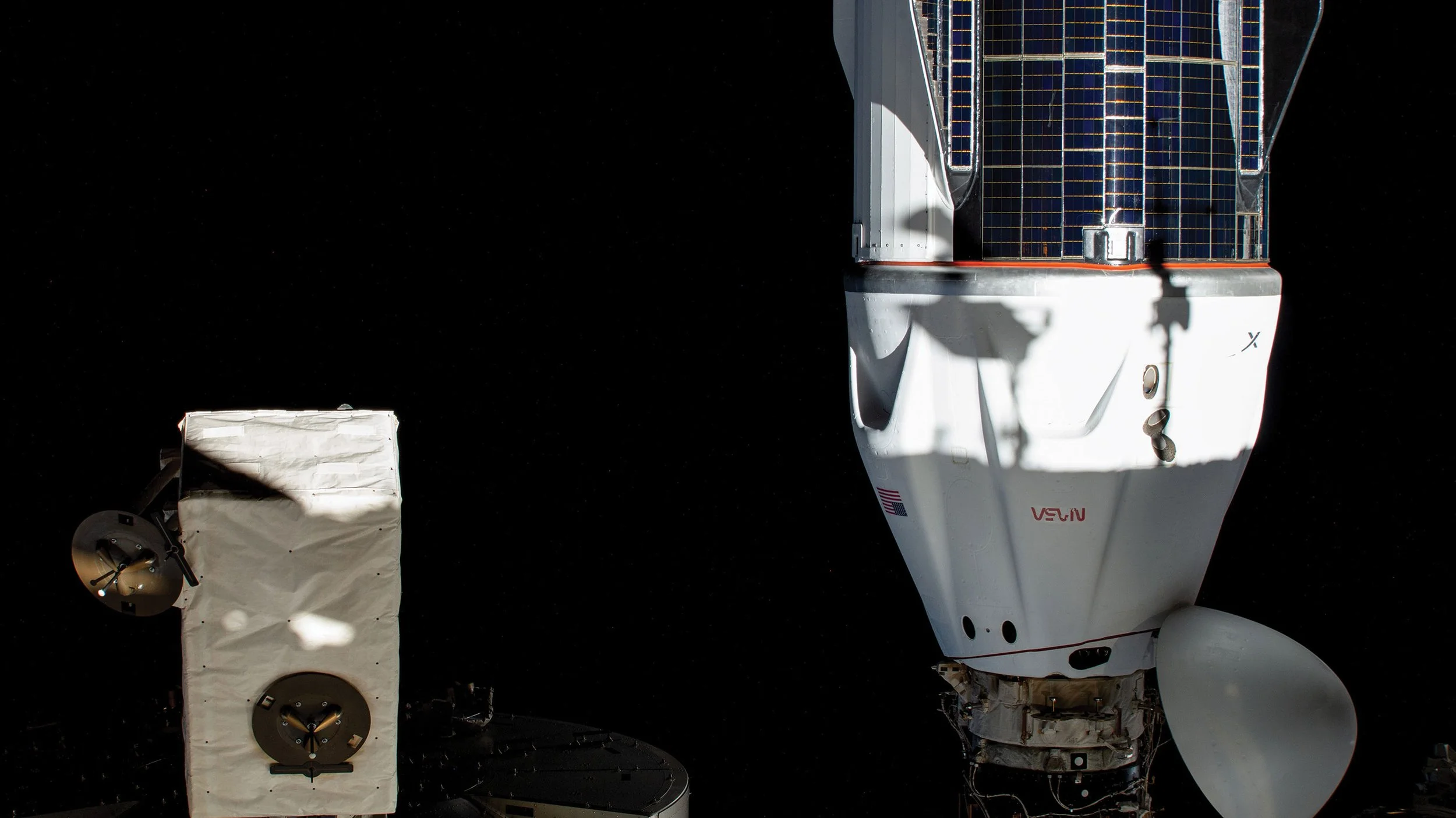
The Dragon cargo resupply spacecraft docked with the ISS in November, delivering more than 25 scientific payloads.
Back on Earth
In the COE of Diabetes and Metabolism, samples are being analyzed by Dr. Chattopadhyay and lab’s senior scientist, Vikram Thakur, Ph.D. They expect to publish their findings later this year.
This project was funded by the National Science Foundation (NSF) and Center for the Advancement of Science in Space (CASIS), with payload support from Space Tango.
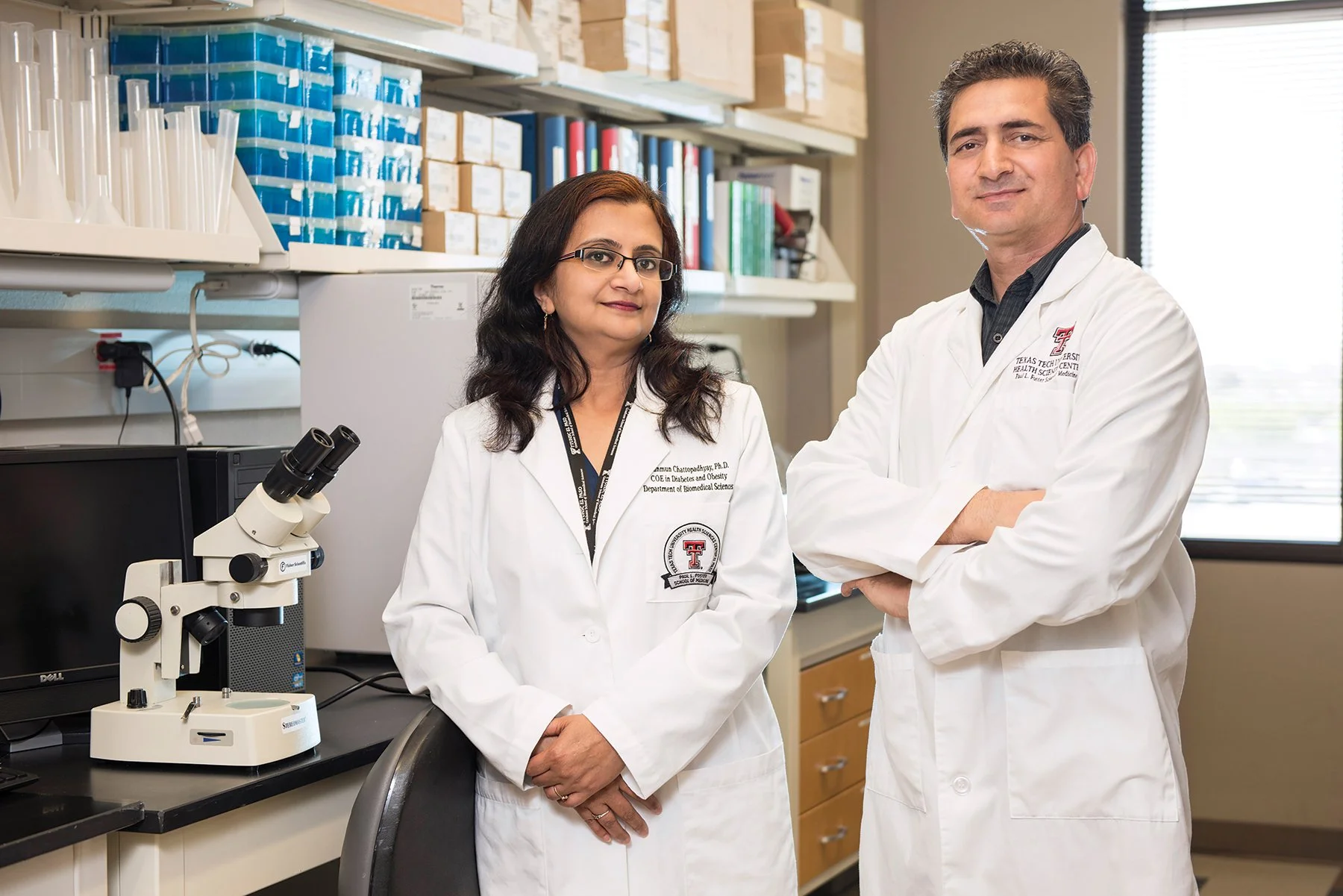
In Texas Tech Health El Paso’s Center of Emphasis in Diabetes and Metabolism, Dr. Chattopadhyay and Dr. Thakur are studying cardiac cells sent to the ISS.
“These findings could reshape how we approach cardiac health — not just for astronauts but for patients everywhere.”
- Dr. Munmun Chattopadhyay
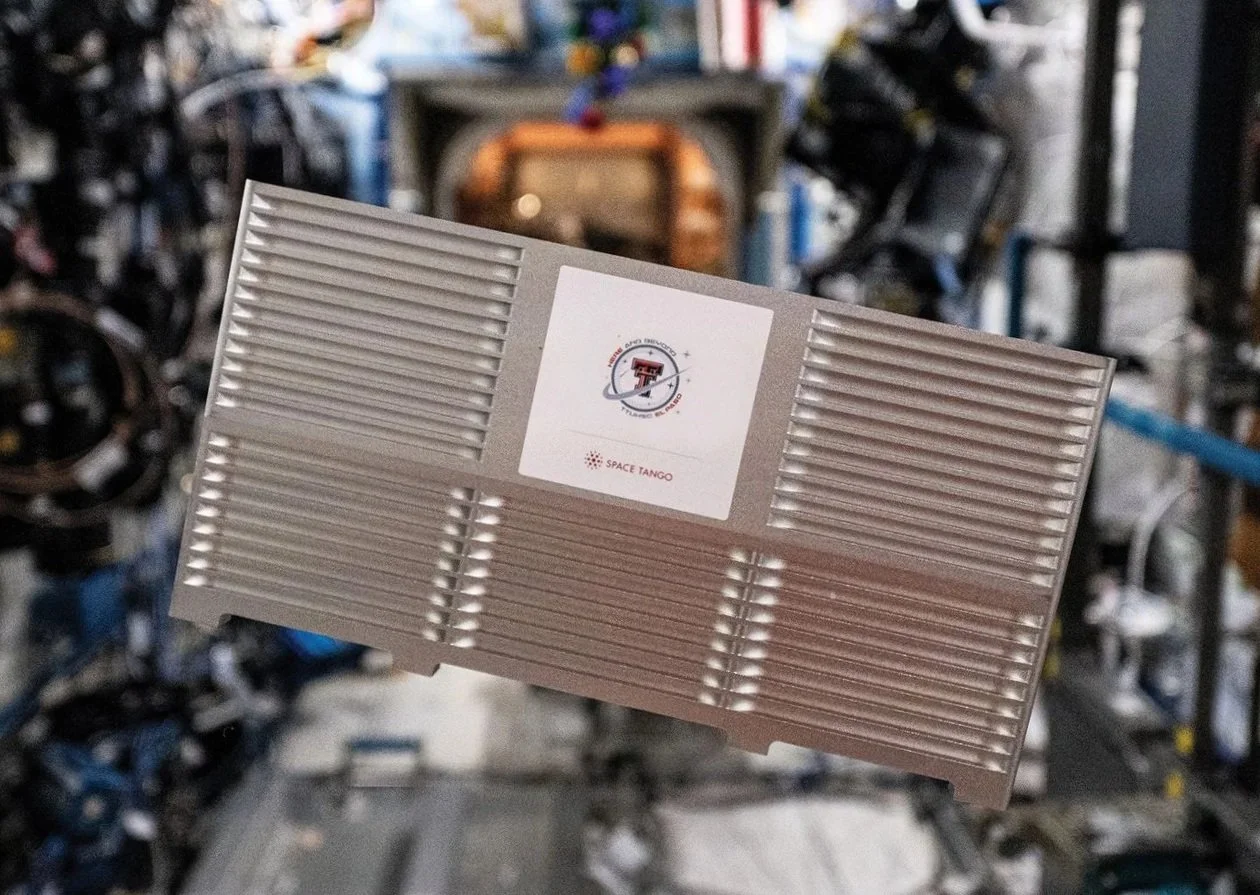
Space Tango, a research and development partner of the ISS program, packaged the cardiac organoids in a CubeLab – a small, self-contained automated laboratory.
Texas Tech Health El Paso Magazine, Fall 2025