
Beyond the Guidelines
By Leonard Martinez
A First Responder’s Message About Early Detection
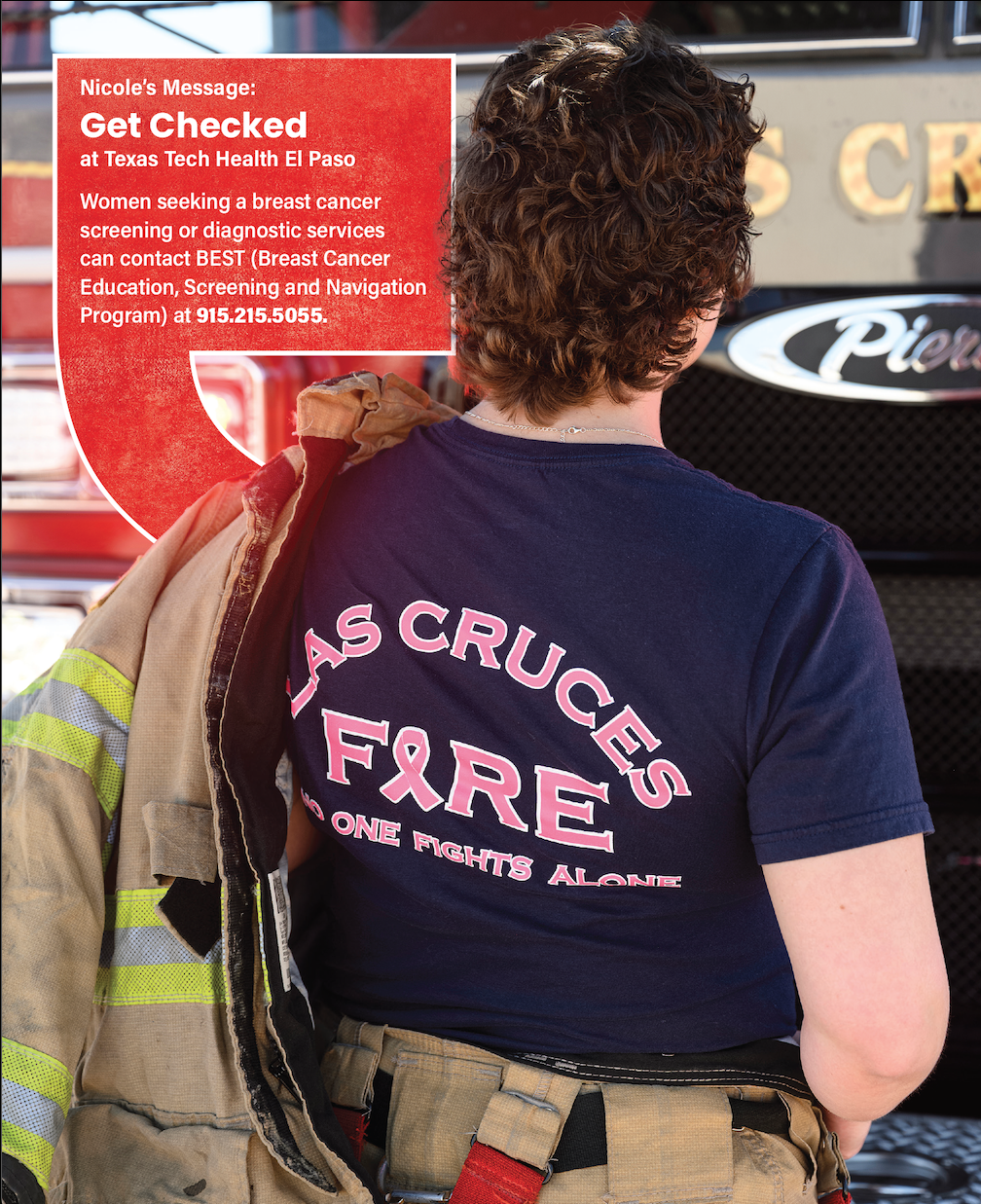
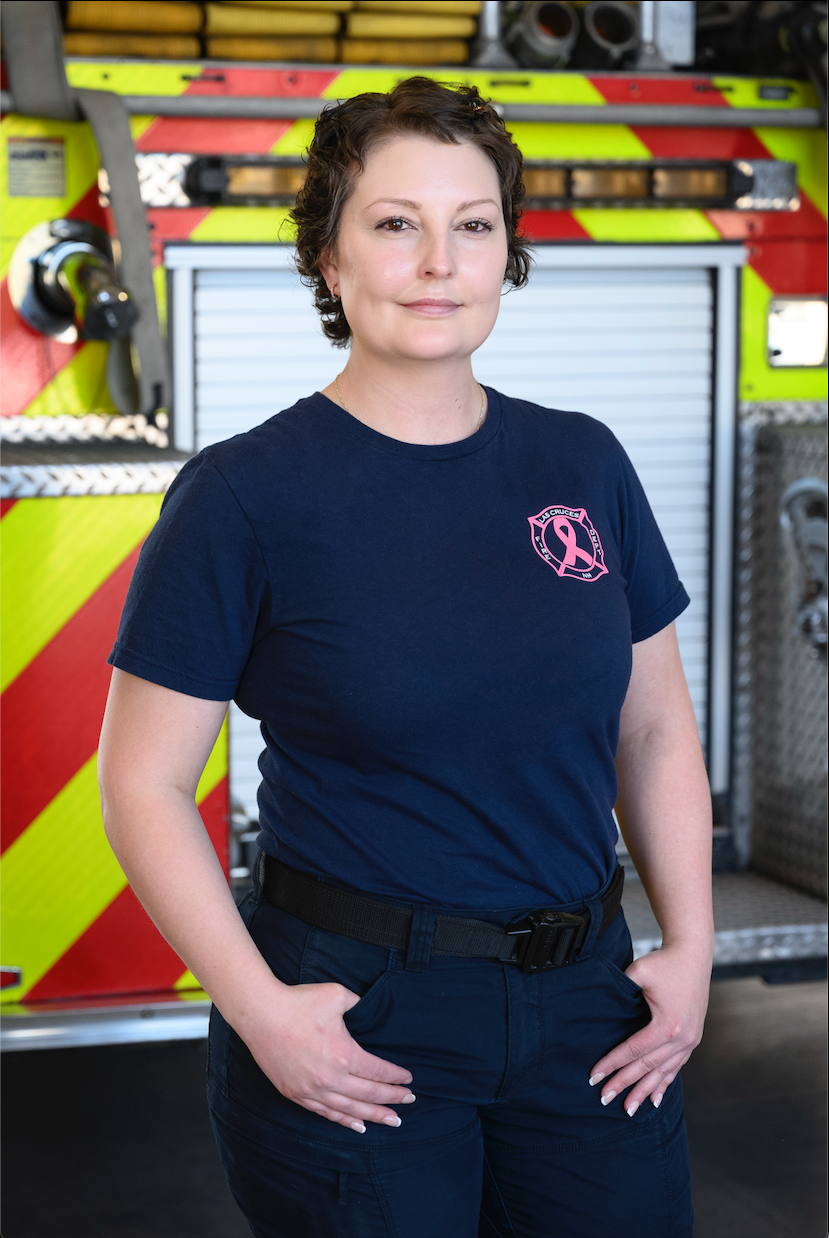
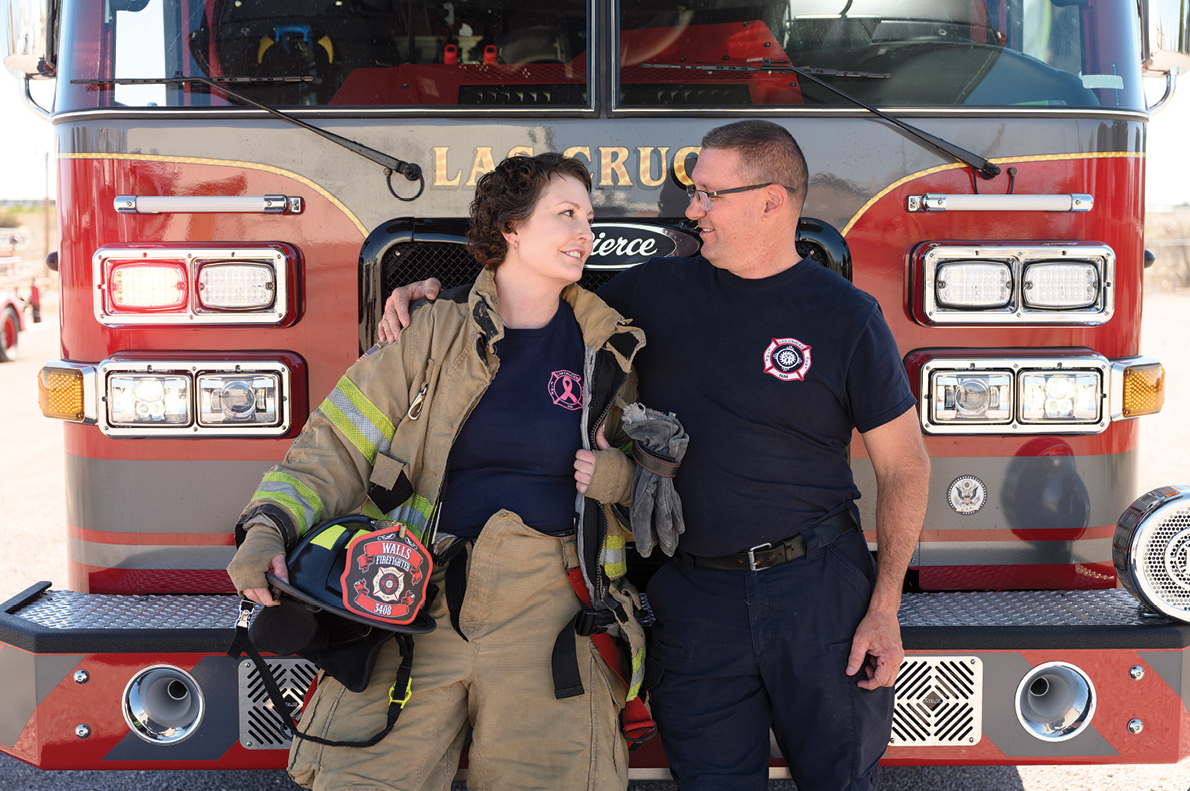
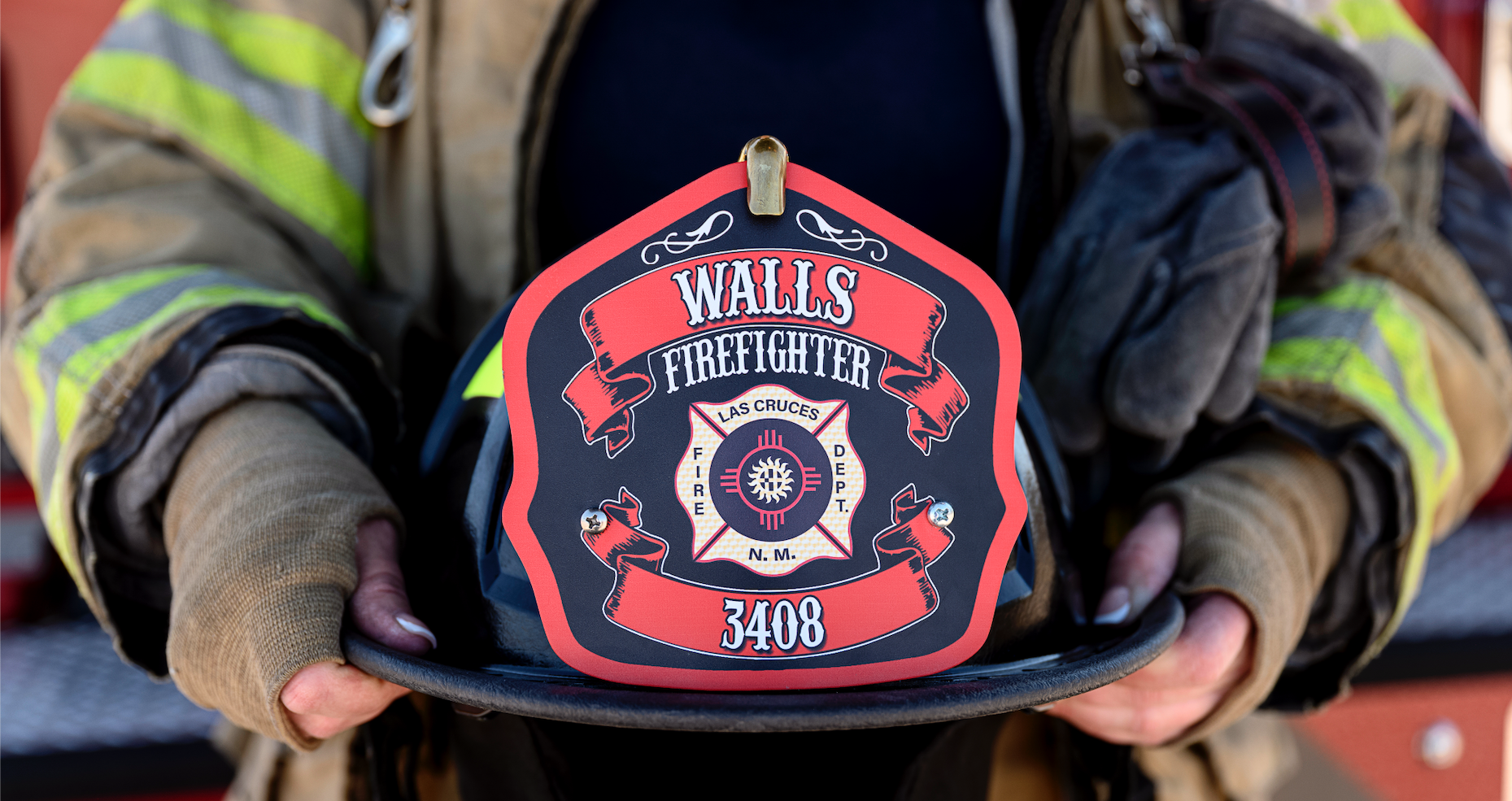
Nicole Walls knows what it means to run toward danger. A firefighter in Las Cruces, New Mexico, she’s built a career on helping others in emergencies. But at 30 years old, Walls faced a crisis of her own when subtle symptoms, including persistent night sweats, led her to seek medical attention.
An initial breast cancer screening was inconclusive, and she was told routine mammograms typically were not advised for someone her age. But Walls trusted her instincts and continued seeking answers. Then, she went to Texas Tech Health El Paso, a decision that changed her life.
“Being told I was ‘too young’ could have been the end of the conversation, but listening to my gut saved my life,” Walls said.
Further testing and an ultrasound revealed abnormalities that led to an urgent referral to a cancer surgeon. The diagnosis: Stage IV breast cancer.
What followed was an intense fight for survival: 16 rounds of chemotherapy, two surgeries, radiation therapy, and the removal of a tumor and lymph nodes. Through every stage of treatment, Walls leaned on the resilience that defined her work as a first responder.
“Cancer doesn’t follow age guidelines, job titles or schedules — and neither should our approach to screening and care,” Walls said.
Walls also learned how difficult navigating cancer care can be, especially for younger patients who may not fit traditional screening recommendations. She found support through Texas Tech Physicians of El Paso, where she received surgical care and personal guidance through her healing journey.
Today, Walls uses her experience to advocate for early detection and patient self-advocacy. She hopes to expand access to screenings, particularly for first responders and young adults.
Her story arrives as Breast Cancer Awareness Month approaches in October, serving as a reminder that early detection saves lives. According to the American Cancer Society, the five-year survival rate for breast cancer is 99% when detected early.
“If sharing my story encourages even one person to advocate for themselves or get checked, then every hard moment was worth it,” Walls said.