
Finding Home in the
Borderplex
By Charlotte Tallman
For international medical residents training at Texas Tech Health El Paso, the journey to becoming a physician in the United States isn’t just about medical training. It’s also about finding a sense of home.
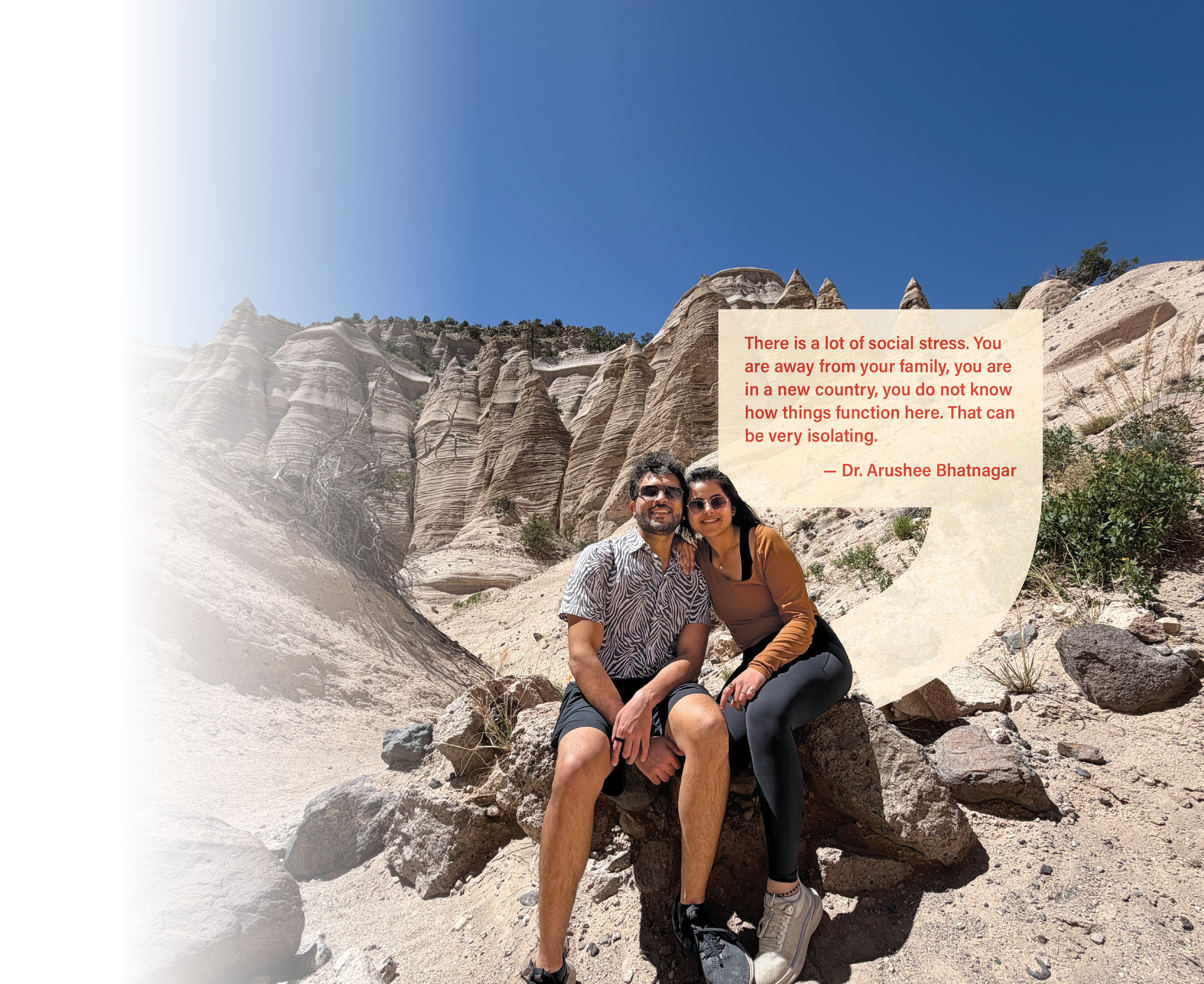
Arushee Bhatnagar, M.D., an international medical graduate and one of many who have trained or are training in the Foster School of Medicine, described the challenges of adapting to a new country. “There is a lot of social stress,” said Dr. Bhatnagar. “You are away from your family, you are in a new country, you do not know how things function here. That can be very isolating.”
She was one of the international medical graduates (IMGs) who trained at the Foster School of Medicine’s residency program. Alongside residency demands, many IMGs navigate unfamiliar insurance systems, finances, visa processes and differences in medical practice.
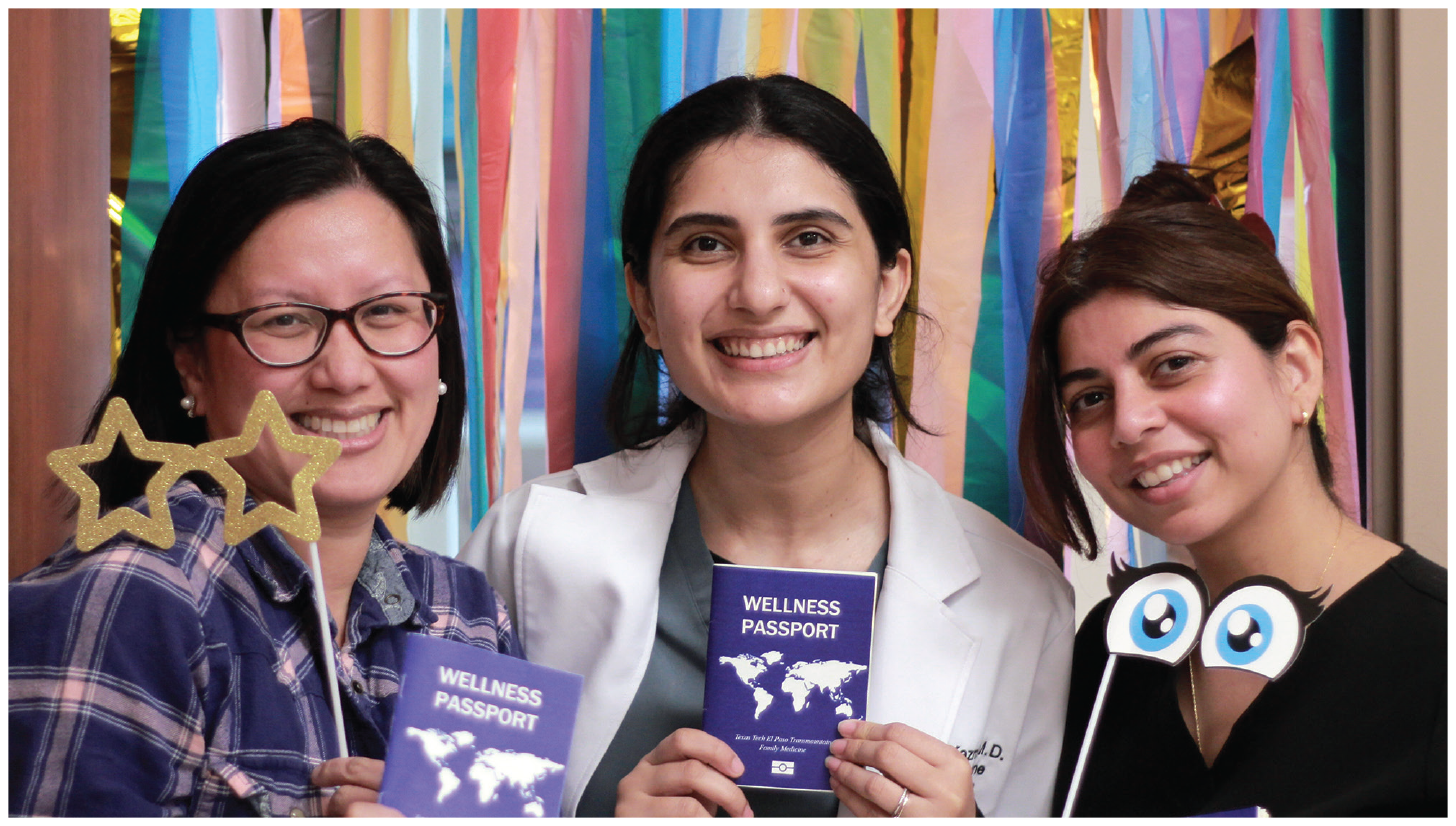
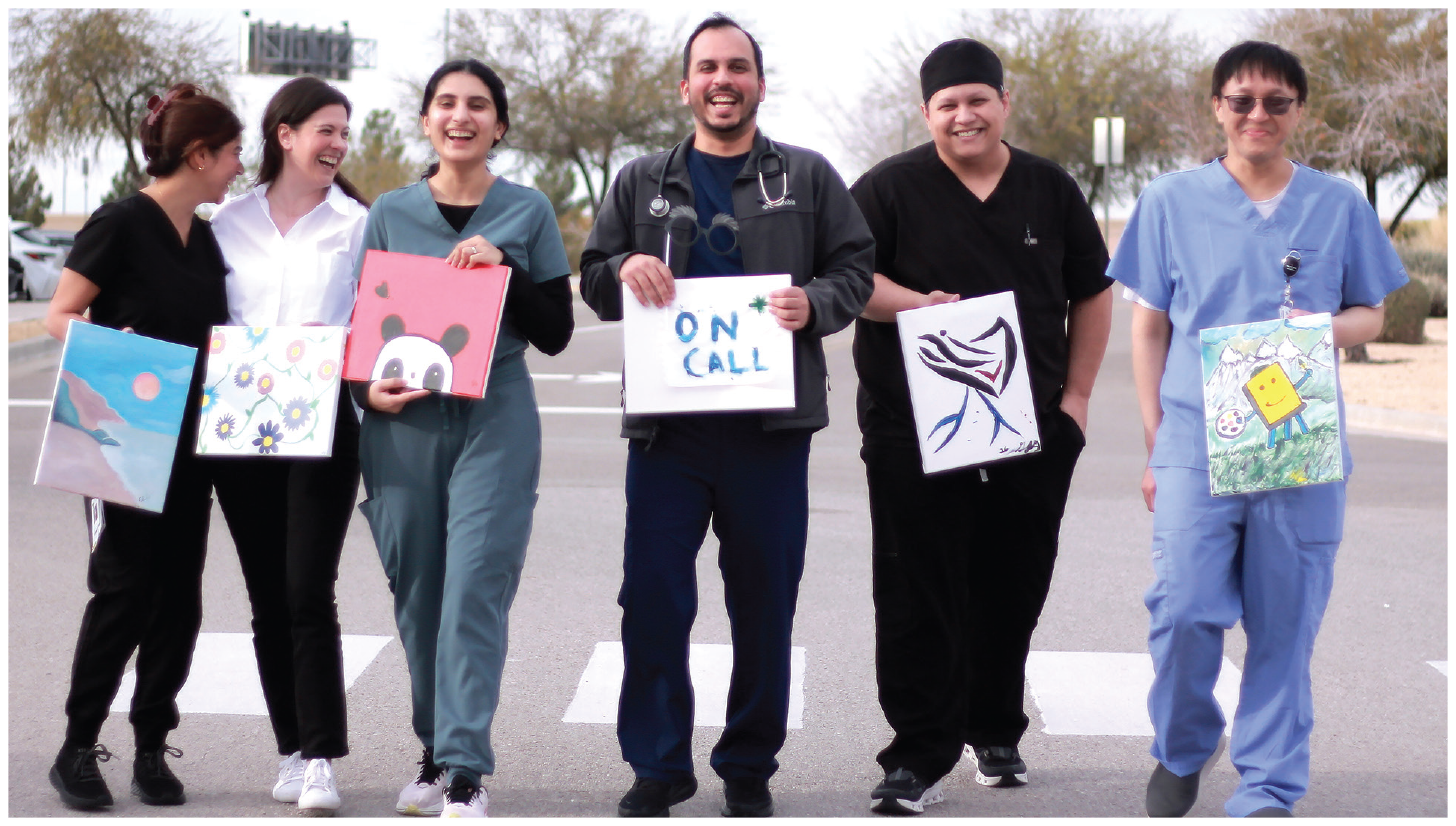
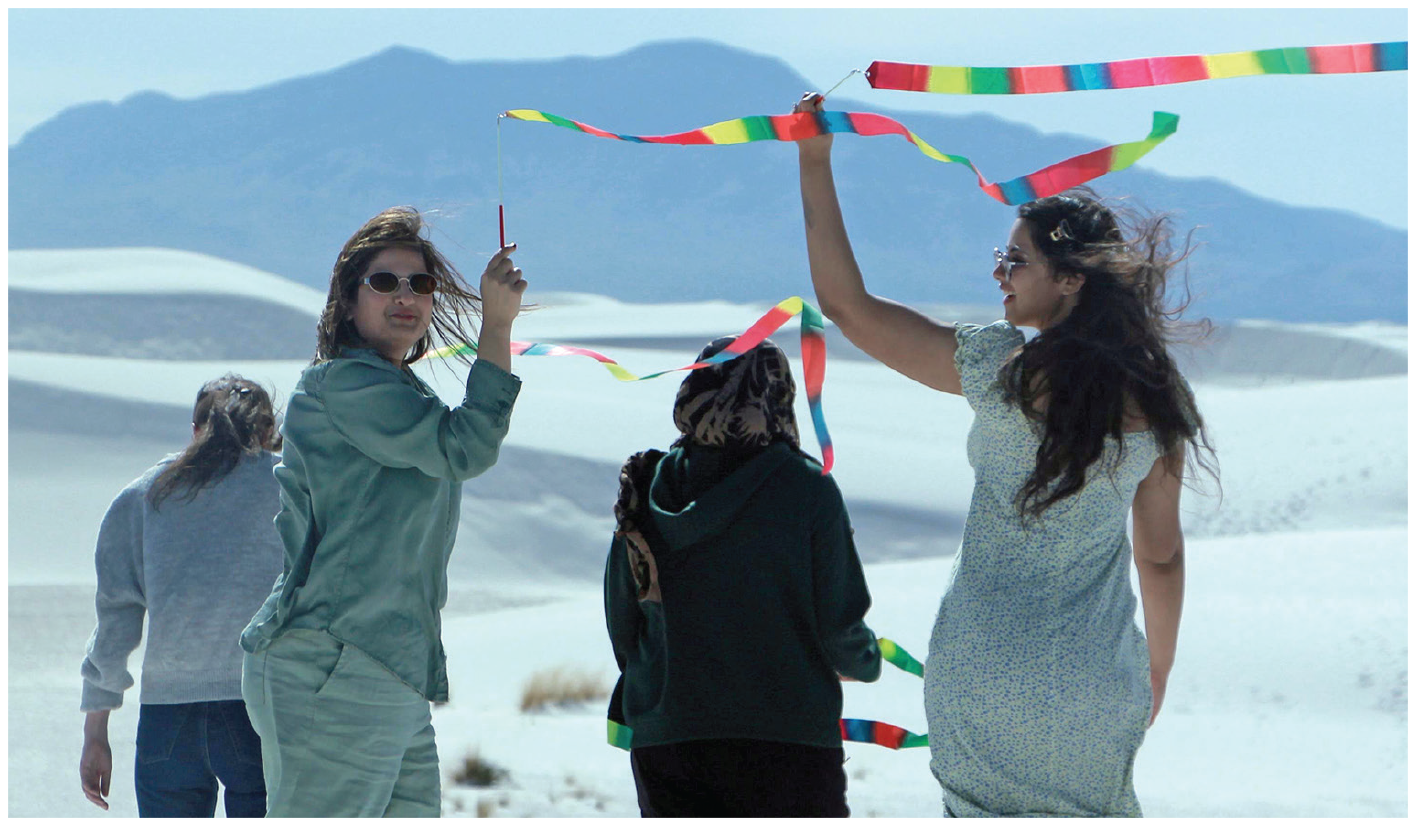
In response, Dr. Bhatnagar and the residency program’s Wellness Committee created the Wellness Passport, a booklet modeled on an international passport that encourages international physicians to build friendships and support one another. Residents earn stickers by participating in social activities, tracking their wellness journey. Activities included a trip to White Sands National Park, yoga sessions, group painting and ceramic art classes and international holiday celebrations.The initiative recently earned national recognition from Intealth, a national consortium that addresses the nation’s physician shortage,which awarded the group a $5,000 grant to expand the Wellness Passport program.
“The Transmountain program had almost 90% international medical graduates in a border city where they interact with a lot of immigrants,” said Catherine Apaloo, M.D., senior vice president and chief IMG experience officer at Intealth. “It went very well with our vision of ensuring well-being for not only the physicians, but also a reflection on the population that they take care of.”
For Dr. Bhatnagar, the program’s greatest success has been the connections it has fostered, and the freedom it gave them to step away from training and focus on one another’s well-being.
“This project gave light to journeys we didn’t know about,” she said. “It helped us build friendships, share our struggles and create a safe environment where no one has to face residency alone.”